
Customs regimes can lead to labyrinthine legal disputes. Budget 2026 must recognise that an excessively defensive Customs posture can itself become a trade barrier, point out Mukesh Butani and Shankey Agrawal.
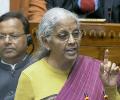
The 2026-27 Budget, seeking to harmonise the government's imperative to grant certainty while ensuring a rational tax policy, had several notable announcements to usher in halcyon days, says Mukesh Butani.

Anticipating US action on tariffs, India seems to have made the first move by revamping its tariff structure by reducing the slabs to eight rates, points out Mukesh Butani.

The government's proposal to compute minimum alternate tax on profits, and not on assets as planned originally in the direct taxes code, has put a smile on the face of industry.

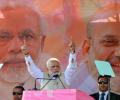
Even if the same party returns to power, what is important to debate is that having introduced an entitlement, how challenging it is to reverse such decisions, says Mukesh Butani.

The Narendra Modi government's alacrity in promoting ease of tax administration, a critical component in the ease of doing business index, has set in motion several incremental policy and administrative reforms, says Mukesh Butani.

A robust dispute settlement system would help the government unlock tax revenues, and also aid ease of doing business.
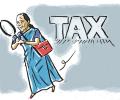
India is often viewed as an aggressive tax jurisdiction by domestic and overseas taxpayers, and making the charter as part of the Act may help restore confidence among taxpayers.
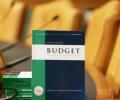
Experts will give their inputs for Budget.
India conceding ground to bring only top 100 digital companies like Google, Facebook, and Netflix into the global taxation pact may have revenue implications. This will mean that New Delhi will have to withdraw the contentious 2 per cent equalisation levy on e-commerce operators by 2023. This may have revenue implications for India, experts pointed out, as the equalisation levy has a much lower annual revenue threshold of Rs 2 crore (euro 0.2 million) as against euro 20 billion agreed by 130 countries at the Organization for Economic Cooperation and Development (OECD). India, along with other developing countries, was pitching for at least euro 1 billion threshold to cover at least 5,000 global entities. India collected Rs 2,057 crore from the equalisation levy in 2020-21, an 85 per cent growth over Rs 1,136 crore in the previous fiscal.

The basics and history of India's tax policy suggests that increase in the number of taxpayers has occurred and so has compliance with a reduction of tax slabs and moderate rates of tax.

Ahead of his government's first full year budget, Prime Minister Narendra Modi on Friday sought ideas from economists to attract investments, create jobs and finance infrastructure to put India back on high growth path.

Chaos in Parliament threw a spanner in the government's efforts to revive the economy and kick-start reforms.

The amendment would help check round-tripping of funds and boost the domestic consumption, Jaitley added

Finance minister tries to put house in order before reforms are unveiled in February.

The Budget sets out a comprehensive vision.
 © 2026 Rediff.com - Advertise with us - Disclaimer - Privacy Policy - Sitemap - Feedback - About us - Terms of use - Grievances